Faces of Evil: Female Concentration Camp Guards
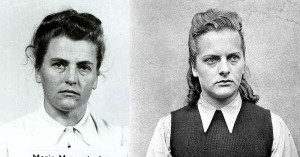
Up until 1942, guards at concentrations camps within Adolf Hitler’s Empire were primarily male. That all changed in 1942 when the first female guards were appointed to Auschwitz and Majdanek. Eventually, there were more than 3,500 female concentration camp guards, a small portion of the nearly 55,000 guards who served in the concentration camps in total.
The women who filled these roles often had no relevant work experience and were often former teachers, hairdressers and other female positions of the time. At first, women signed up on their own, but that later changed. As time passed, women were recruited from newspaper ads that asked them to show their spirit for Hitler’s empire.
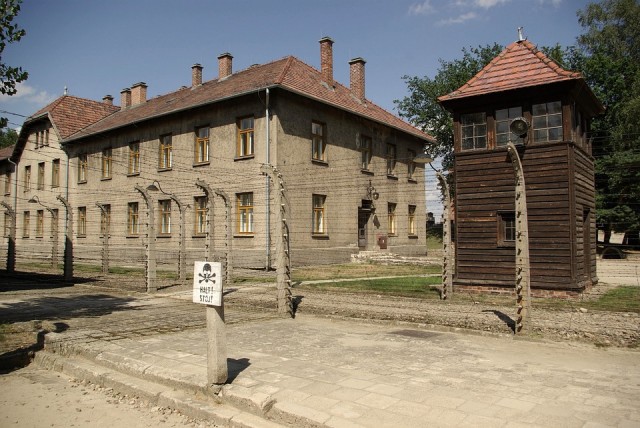
The SS were looking for single women who were between 21 and 45. Many might suspect that the women were more lenient with the prisoners, but that is not so. The female guards were just as corrupt as the men.
New recruits would begin their training at the Ravensbruck Camp outside of Berlin. Training lasted anywhere from a month to six months. Following this, the women would be sent to one of the camps. During their training, the recruits would learn how to punish prisoners, and how to maintain work speed for the laborers. Recruits were taught in group classes by the head wardresses.
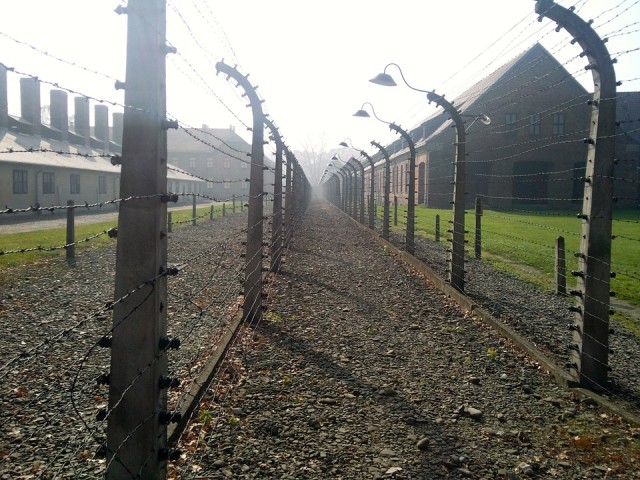
Women were limited to guarding just females. This meant there could only be female guards where there were female prisoners. As such, the female guards oversaw the women performing forced labor, while ensuring everyone was following the camps’ strict rules. The guards were abusive, often attacking prisoners over minor issues.
hanged in 1948.
Irma Grese

Other infamous female guards such as Irma Grese met the same fate. Irma Grese was known as The Beautiful Beast, as well as The Blonde Angel. Like Maria Mandl, she earned her name through her actions. Many prisoners found her to be attractive, but she was one of the most brutal of the female guards.
Grese had a specific look to her. She carried a pistol and whip, and always wore black leather boots. She was in control of around 30,000 women, and was the second-most superior guard at the camp. When Grese was put on trial by the British, her war crimes were revealed by those she had abused.
They claimed Grese ordered beatings and random shootings of prisoners. Grese was said to have ordered inmates to gas chambers and to have her starved dogs attack prisoners. Those who were speaking against her while she was on trial stated that they felt she took pleasure in all of the evil she was doing.

Several people even claimed she had lampshades in her hut that were made from prisoners’ skins, but that has since been disputed. Irma Grese was hanged by the British in 1945 and was the youngest woman to die (22) due to British law in the 1900s.
The brutality spared no one, and if it did, it was made sure that the guard being too lenient was handled. One such example of this is Klara Kunig, who was a guard at Ravensbruck. Kunig was told by the head wardress that she wasn’t rough enough with the prisoners and, because of this, she was relieved of her position.

After the War
Many of the guards were captured outside of camps after the war ended. The United States Army held between 500-1,000 females in this period. Many were released by the Army, as male guards were the priority; however, some female guards did face punishment in the form of hangings for their crimes. Additionally, when the Soviets came in and took the area over, many of the female guards that were captured were executed at that time.


Comments
Post a Comment